5-Minute Daily Declutter Routine for Working Moms
5-Minute Daily Declutter Routine for Working Moms
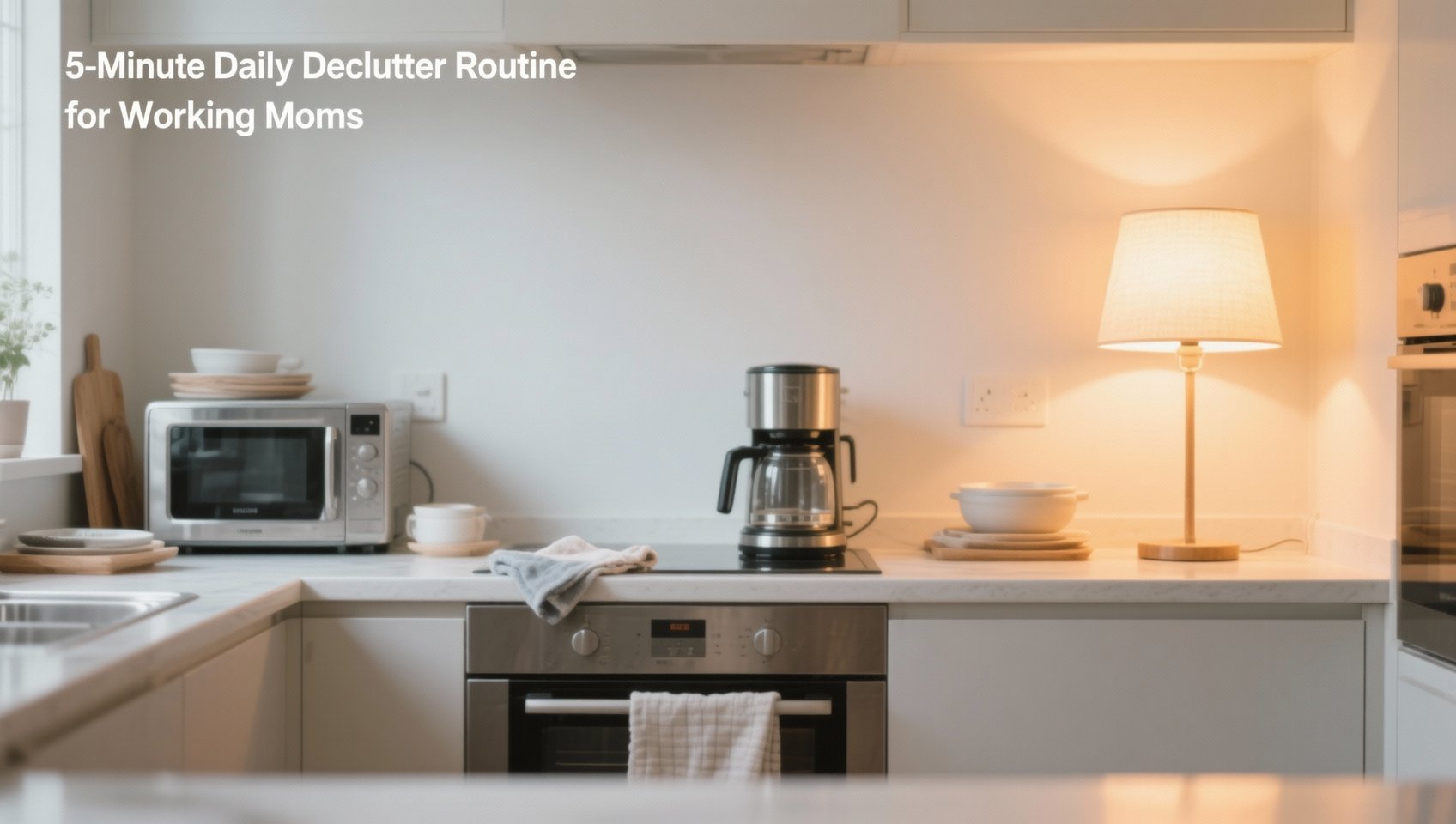
The 5-Minute Daily Declutter Routine That Actually Works for Working Moms
Picture this: It’s 7:45 AM. You’re trying to get out the door, but you’re playing a high-stakes game of “Find the Shoe” while your toddler is using your work laptop bag as a step stool. The entryway, that crucial landing pad between your home and the world, is a chaotic museum of yesterday’s snacks, mismatched mittens, and a mysterious pile of mail. You feel that familiar, frantic tension start to build. Sound like your house? Friend, you are not alone. I read a stat once that said the average person spends 2.5 days a year just looking for lost items. As a working mom, I don’t have 2.5 minutes to spare, let alone days.
Here’s the good news: you don’t need a weekend-long overhaul. What you need is a tiny, non-negotiable habit. A five-minute daily declutter routine for your entryway can be the keystone habit that makes your entire home—and your mornings—feel more functional. This isn’t about creating a Pinterest-perfect mudroom. It’s about creating a system that works for your real, messy, beautiful life.
H1: 5-Minute Daily Declutter Routine for Working Moms
H2: Why Your Entryway is Your Secret Weapon
Let’s be honest: most home organization advice starts with the linen closet or the pantry. But I’m telling you, if you want to feel in control, start with the space you touch first and last every single day. Your entryway sets the tone. A chaotic one means you start your day stressed and come home to a visual “to-do” list. A functional one is like a deep breath. It’s the launchpad for your morning routine for working moms and the soft landing pad at the end of a long day.
For years, I fought the entryway battle. I’d buy cute baskets that just became black holes for junk. I’d install hooks that were immediately overloaded. The breakthrough came when I stopped trying to contain the chaos and started designing for the flow of our actual life. I watched what we actually did. We dumped. We searched. We rushed. My system needed to accommodate that, not fight it.
Real Example: My “aha” moment was with my son’s library books. They’d always be lost in the abyss of the kitchen counter, leading to frantic searches and late fees. I finally put a dedicated, brightly colored bin labeled “LIBRARY” right by the door. It felt silly—such a specific solution. But it worked instantly. No more lost books, no more fees. It taught me that hyper-specificity beats generic storage every time.
H2: The “Afternoon Unload” – Your Non-Negiable 5 Minutes
Forget trying to declutter in the morning madness. The single most effective shift I made was timing. I do my five-minute entryway reset the moment I walk in the door after work or school pickup. Before I check my phone, before I start dinner. It’s counter-intuitive because you’re tired, but it prevents the mess from ever taking root. Here’s the exact script:
- Mail & Paper (60 seconds): Stand at a recycling bin (mine is in the garage, right inside the door). Open every piece of mail. Recycle junk immediately. Put bills in a designated “Action” file (I use a simple wall-mounted file sorter). Done. No piles.
- Bag Dump (90 seconds): Empty my work bag and my kid’s backpack. Lunch containers go straight to the kitchen sink. Permission slips go on the fridge with a magnet. My planner and laptop go to their dedicated spot on my desk. The bags themselves get hung on hooks (not thrown on the floor!).
- Shoe & Outerwear Sort (90 seconds): Shoes go into their designated cubby or onto a shoe tray. Coats and hats get hung up. If something is out of season or rarely worn, it gets moved to a closet upstairs right then.
- The “What Doesn’t Belong” Scan (60 seconds): A quick visual sweep. Is there a toy car? Toss it in the toy bin. A coffee mug? March it to the kitchen. This stops migration.
Product Tip: The key is having the right tools in place. I swear by the IKEA SKADIS pegboard system (about $25-$50 depending on size). You can customize it with hooks, bins, and shelves for each family member. For shoes, the SimpleHouseware Stackable Shoe Rack ($25 on Amazon) is slim, sturdy, and doesn’t look like dorm furniture.
H2: Design for Dumping (The “Drop Zone” Doctrine)
Conventional wisdom says everything should have a “home.” My counter-intuitive tip? Create a sanctioned “dump zone.” Trying to make every single item be perfectly put away is why we fail. Instead, designate one attractive, large container as the daily catch-all. I use a big, beautiful woven basket by the door.
This is for the stuff that doesn’t have an immediate home or that you’ll need to grab on the way out tomorrow: that package to return, the dry cleaning, the soccer cleats. The rule is: everything in the “dump zone” basket must be processed every Sunday as part of your sunday reset routine. It’s not a permanent home; it’s a temporary holding cell. This one basket saves my sanity because it contains the mess visually and gives me permission to not deal with it right this second.
Real Example: My husband used to leave his keys, wallet, and work badge on the kitchen counter. It drove me nuts. Instead of nagging, I bought a small, sleek leather tray and put it on the entryway console. I said, “Honey, this is your official drop spot.” It worked because it was easy and respected his habit. He dumps, it looks neat, and I don’t trip over his stuff. Win-win.
H2: The “Kid-Centric” Command Center
If your kids are like mine, they generate clutter like it’s their job. Your entryway system must work for them, at their height, with their comprehension level. This is more than just a low hook.
- Visual Labels: Use pictures for pre-readers. A photo of a backpack on a bin. A drawing of a cat on the pet leash hook.
- The “Out-the-Door” Station: A small shelf or cube with a basket for each child. On Sunday night, you help them load it: Monday’s library book, non-perishable snacks for the week, a spare pair of socks. Mornings become grab-and-go.
- The Art & Schoolwork Problem: Don’t let it pile up! Install a clip wire (like the Umbra Hangline, $20) or a bulletin board. The rule: when it’s full, the oldest piece comes down. Take a photo of it for your digital memory box, then recycle it. This honors their work without drowning in paper.
Product Tip: For kid stuff, the Tot Tutors Kids’ Toy Storage Organizer Bin (around $35) is perfect. The colorful, lightweight bins are easy for little hands to pull out. Use one for hats/gloves, one for sports gear, etc.
H2: Your Sunday Reset: The 15-Minute Weekly Tune-Up
The daily 5-minute routine keeps the ship afloat, but the weekly reset keeps it sailing smoothly. This is part of your broader sunday reset routine. Every Sunday evening, I spend 15 extra minutes in the entryway.
- Empty and wipe out the “dump zone” basket.
- Check the “Action” file and deal with any bills or paperwork.
- Restock the “out-the-door” station bins with snacks, masks, etc.
- Do a quick sweep/vacuum of the floor (it’s amazing how much crumb accumulation happens in a week).
- Assess the hooks: Are they holding out-of-season items? Relocate them.
This weekly touch-point prevents the slow creep of clutter and makes Monday morning feel fresh, not frantic.
H3: Your Turn: Action Items to Start Tonight
Don’t overthink it. Progress, not perfection.
- Tonight: On your way in, stop. Do the “Afternoon Unload” just once. Time it. See how it feels.
- This Weekend: Buy or designate one storage solution. Just one. A shoe tray, a hook rack, or a basket for the “dump zone.”
- Next Sunday: Try the 15-minute reset. Put on a podcast and just do it.
Start small. The goal isn’t a flawless entryway by tomorrow. The goal is to walk in the door tomorrow and feel 10% less stressed. You’ve got this.
FAQ Section
Q: I don’t have a real entryway—just a door that opens into my living room. How can I make this work? A: This is so common! Use furniture to create a zone. A slim console table behind your sofa with a tray for keys and a basket underneath for shoes can define the space. A floor-to-ceiling tension rod in the corner with nice hooks can act as a coat closet. It’s about creating visual boundaries.
Q: My partner/kids won’t participate in the system. What do I do? A: Lead by example, and make it stupidly easy for them. Don’t lecture. Just say, “I put a hook here for your keys so you can always find them!” If their stuff ends up on the floor, calmly put it in their designated spot (or in the “dump zone” basket). Often, once they experience the benefit of always finding their stuff, they come around.
Q: Is five minutes really enough? A: For daily maintenance, absolutely. The key is consistency. Five minutes daily prevents the need for a 60-minute marathon cleanup on Saturday. It’s the brushing-your-teeth of home organization.
Q: How do I handle all the seasonal stuff (sunscreen, bug spray, umbrellas)? A: Create a “Portable Essentials” bin. A clear, lidded bin that lives on a shelf in your entryway closet or console. When the season changes, swap the contents. Summer bin has sunscreen and bug spray. Fall bin has gloves and hand warmers. It keeps things accessible but not cluttering the daily space.
Tags
Related Articles
5-Minute Home Resets for Working Moms: Cozy & Clean
5-Minute Home Resets for Working Moms: Cozy & Clean
5-Minute Kitchen Reset for Working Moms: Keep It Clean Daily
5-Minute Kitchen Reset for Working Moms: Keep It Clean Daily

Create a Cozy Reading Nook: Budget-Friendly Home Decor
Create a Cozy Reading Nook: Budget-Friendly Home Decor