5-Minute Daily Reset for a Tidy Home with Kids
5-Minute Daily Reset for a Tidy Home with Kids
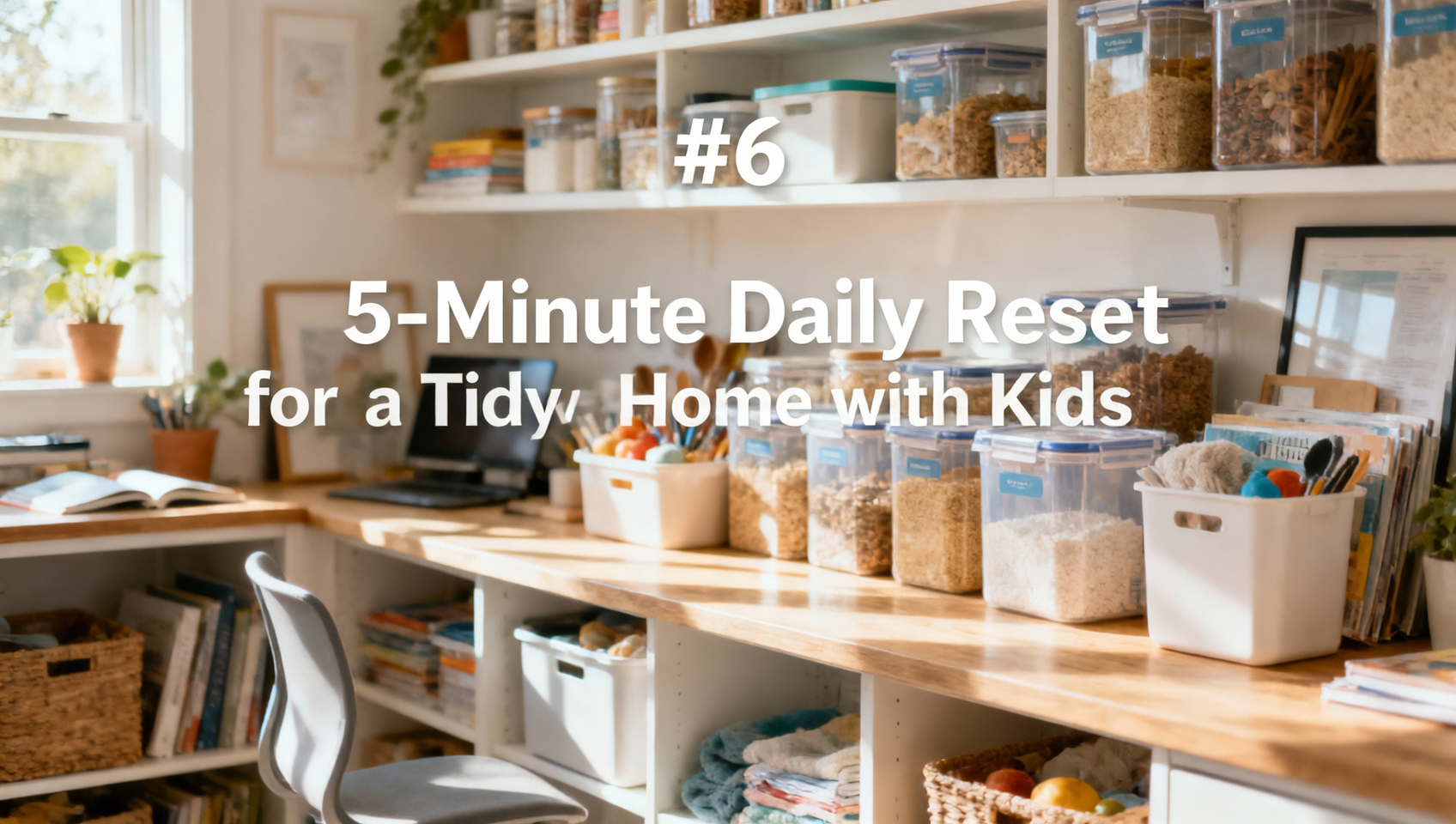
The 5-Minute Daily Reset for a Tidy Home with Kids
You know the scene. It’s 7:45 PM. The kids are finally, finally asleep. You walk out of their room, take a deep breath, and turn around to face the living room. It looks like a toy store exploded. There’s a half-eaten banana on the coffee table, three different socks on the floor, and a trail of crayons leading to the kitchen. The thought of spending your precious hour of quiet cleaning up is enough to make you want to just go to bed.
Here’s the thing: I used to think a tidy home required marathon cleaning sessions on the weekend. Then I had my second kid, we moved into a house with significantly less storage, and I realized that system was broken. The clutter wasn't just mess; it was mental static. The game-changer for me wasn't a fancy organizing system—it was a tiny, five-minute habit.
The "Closing Shift" Reset
I call my five-minute ritual the "Closing Shift." Think of it like you’re a manager shutting down a store for the night. Your goal isn’t deep cleaning; it’s resetting the space to a functional baseline for the next day.
My ritual starts at 8:30 PM, right after I’ve had a few minutes to myself. I set a timer on my phone for five minutes. That’s it. I grab a laundry basket and I walk through our main living areas: the living room, kitchen, and dining nook. My only job is to put things back in their "homes."
- The puzzle pieces go in the bin on the shelf.
- The stray coffee mug goes in the dishwasher.
- The mail gets sorted into a tray on my desk.
- The loveys and stuffed animals get tossed into the toy basket.
I don’t wipe counters or sweep floors during this time (that’s for my weekly cleaning routine). This is pure, simple re-homing. The magic is in the time limit. Knowing I only have to do it for five minutes makes it feel manageable, even on the most exhausting days. Some nights, I get through the whole downstairs. Some nights, I just clear off the kitchen island. Both are wins.
Quick Win: Tonight, set a timer for 3 minutes. Don’t even aim for 5. Just grab a basket, pick up anything that’s obviously out of place, and stop when the timer goes off. You’ll be shocked at the difference.
Storage Solutions That Actually Work in Small Spaces
When your square footage is limited, your home organization strategy needs to be ruthless and clever. Vertical space and dual-purpose furniture are your best friends. Forget bulky, single-use organizers.
One of our best investments was a set of wall-mounted shelves with bins in the play area. The bins aren’t labeled with words (my preschooler can’t read yet), but with pictures: a train, a block, a doll. This makes clean-up something my kids can actually help with. The floor is clear, and toys have a designated spot up and off the ground.
In the kitchen, I installed a simple metal rod with S-hooks on the side of our pantry door. This is where lunch boxes, reusable grocery bags, and aprons live. It’s dead space that became prime real estate. For my daughter’s art supplies, I repurposed a hanging shoe organizer on the back of her closet door. Each pocket holds markers, glue sticks, or sticker sheets. It’s contained, visible, and doesn’t eat up drawer space.
The common mistake here is buying storage before purging. You’ll just end up organizing clutter. First, get rid of the broken toys, the dried-out markers, the duplicate sippy cup lids. Then see what you actually need to store. Your solutions will be simpler and cheaper.
Building a "Kid-Friendly" System (That You Can Actually Maintain)
A system only works if everyone can use it. This was a hard lesson for my type-A personality. I wanted beautiful, matching bins. My kids needed something simple and foolproof.
We have a "Staging Zone" by our back door—it’s just a low bench with two cubbies underneath. Each kid has a cubby. Backpacks, shoes, and library books go here. If it’s on the floor, it gets tossed in the cubby. It’s not pretty, but it prevents the dreaded morning shoe hunt.
Another real-life example: laundry. My old system of sorting into darks/lights/colors was collapsing under the weight of tiny socks. Now, we have two hampers in the hallway: one for towels/sheets, one for everything else. That’s it. It’s reduced the "sorting" mental load by 70%. The goal is flow, not perfection.
The mistake is creating a system that’s too complex for your life stage. If you have toddlers, open bins you can dump are better than lidded boxes they can’t open. Match the system to your family’s capacity, not a Pinterest board.
How This Fits Into a Real Working Mom Schedule
I’m not going to lie and say I do this perfectly every single night. Some days, work runs late, someone gets sick, or I’m just tapped out. The beauty of a five-minute reset is its flexibility.
On a good day, it’s part of my wind-down after the kids are in bed. On a chaotic day, I might do a "Two-Minute Tidy" with the kids right before bedtime stories. We blast a song and see how much we can put away before it ends. It becomes a game, not a chore.
I also lean on micro-resets during the day. While my coffee brews in the morning, I unload the dishwasher. During the five minutes my kids are eating their after-school snack, I sort the mail and recycle the junk. These tiny actions prevent the pile-up that feels overwhelming later.
The key is to anchor these small habits to things you already do (coffee brewing, snack time, etc.). They become automatic, not another item on a daunting to-do list. This is how you build a working mom schedule that sustains you, rather than drains you.
Your Turn: Start Your Reset Tonight
This isn’t about adding more to your plate. It’s about a small shift that makes everything else feel lighter.
- Identify Your Hotspot: What’s the one area that, when cluttered, causes you the most stress? The kitchen counter? The living room floor? Start your reset there.
- Find Your 5 Minutes: Look at your evening. Is it right after bedtime? During the credits of your show? Put a recurring reminder in your phone for a week to build the habit.
- Define "Homes": Choose 3-5 items that are always adrift (remote controls, hair ties, kid cups) and give them a definitive spot. Just those few things will make a huge difference.
- Celebrate the Close: When your timer goes off, stop. Look at what you accomplished in just five minutes. That’s your win. The rest can wait for tomorrow.
Progress, not perfection. A reset home means a reset mind. You’ve got this.
FAQ
Q: What if I don't have a full five minutes? A: Start with 90 seconds. Seriously. The habit is more important than the duration. Even a 90-second sweep to clear off one surface is a victory that builds momentum.
Q: My partner/kids don't help. How do I get them on board? A: Make it easy and obvious. Use picture labels for kids. For partners, try a direct but kind ask: "Having the living room reset helps me start the day calmly. Can we tackle it together for five minutes after dinner?" Focus on the benefit to the family, not the chore itself.
Q: I do the reset, but it's messy again by 10 AM. What's the point? A: The point is the reset, not the perpetual perfection. You're giving yourself a clean slate each morning, which is a gift. The mess will happen—it's a sign of a lived-in, loved-in home. The reset is about managing the chaos, not eliminating it.
Q: Where do I start if my whole house feels overwhelming? A: One room. One corner. One drawer. Set your timer for five minutes and work on just that single, small space. Completing one contained area gives you a psychological boost and proves to yourself that you can tackle it, bit by bit.
Tags
Related Articles

5-Minute Home Resets for Working Moms: Cozy & Clean
5-Minute Home Resets for Working Moms: Cozy & Clean
5-Minute Kitchen Reset for Working Moms: Keep It Clean Daily
5-Minute Kitchen Reset for Working Moms: Keep It Clean Daily

Create a Cozy Reading Nook: Budget-Friendly Home Decor
Create a Cozy Reading Nook: Budget-Friendly Home Decor