5 Quick Pantry Organization Hacks for Busy Working Moms
5 Quick Pantry Organization Hacks for Busy Working Moms

5 Quick Pantry Organization Hacks for Busy Working Moms
You know that moment when you open your pantry, and a box of pasta launches itself at your head? No? Just me? Last Tuesday, I was already running 15 minutes late for a 9 AM Zoom call, still in my slippers, grabbing a granola bar for my preschooler. The bar was from 2023. I didn't even know we had granola bars from 2023.
That's when I realized: my pantry wasn't just messy—it was actively sabotaging me. And let's be real, as working moms, we don't need any more saboteurs in our lives. We've got enough with the laundry pile, the school permission slips, and that one Tupperware lid that's been missing since the Obama administration.
So I went on a mission. I tested, I failed, I cried a little over spilled quinoa. But I came out the other side with five hacks that actually work—especially if you need to keep tiny hands out while still making your pantry look like it belongs on Pinterest. Here's what I learned.
Hack #1: The "Kid Height" Snack Zone (With a Twist)
What I wish I knew: You don't have to child-proof your entire pantry. You just have to child-proof the bottom two shelves.
I spent months trying to keep my 4-year-old out of the snacks entirely. I bought fancy latches, installed child-proof locks, even tried that magnetic system that was supposed to be "invisible." You know what happened? She figured out the latches in 20 minutes, and I spent every morning wrestling with a lock while she stood there smugly eating a fruit pouch.
The real solution: Give them a designated "yes" zone.
On the bottom shelf, I now keep a clear plastic bin labeled "EMMET'S SNACKS" (yes, in all caps—it makes me feel official). Inside: pre-portioned bags of crackers, apple sauce pouches, and those weird veggie straws that look like packing peanuts but somehow taste like childhood. Above that? Everything I don't want her touching.
The twist: I bought these really cute, modern-looking baskets from Target (the woven ones with leather handles). They're stylish, they hide the chaos, and they're tall enough that my daughter can't see what's inside the bins on the higher shelves. Out of sight, out of mind—for her, at least. For me? I know exactly where the emergency chocolate is.
Quick Win: Take everything your kids can reach and put it in ONE container. That's it. Ten minutes, done. Your pantry will look 50% more organized instantly.
Hack #2: The "Meal Plan On A Post-It" Method
What I wish I knew: Full-on meal planning for busy moms is a fantasy if you're not the type who enjoys spreadsheets. I am not that type.
I've tried the apps. I've bought the cute printable planners from Etsy. I've even attempted the "cook once, eat all week" thing (spoiler: I ate the same chili for five days and now I can't look at beans). But here's what actually works for my family: the Post-It system.
Every Sunday night, I grab three Post-Its. On the first, I write three dinners for the week (that's it—three, not seven). On the second, I write the three key ingredients I need to buy. On the third, I write the pantry staples I already have that match those dinners.
Here's a real example from last week:
- Dinner #1: Sheet pan chicken + broccoli + sweet potatoes (ingredients: chicken, broccoli, sweet potatoes—already had olive oil and spices)
- Dinner #2: Black bean tacos (ingredients: black beans, tortillas, avocado, salsa)
- Dinner #3: Pasta with jarred sauce + frozen meatballs (zero additional ingredients needed)
That third dinner is my safety net. It's the "I'm too tired to adult" meal. And because I already have the pasta and sauce in my pantry (organized, thanks to Hack #1), I can make it in 12 minutes flat.
The Post-Its go on the inside of my pantry door. When I'm standing there at 5:30 PM with a hangry toddler attached to my leg, I don't have to think. I just look at the Post-It. It's saved my sanity more than any meal delivery service ever did.
Why this works for working moms: It takes five minutes. You don't need to scroll through recipes. You don't need to check your phone. You just need three Post-Its and a willingness to repeat meals (which, let's be honest, your kids probably want anyway).
Hack #3: The "Basket By Category" Rule (No, It's Not Boring)
What I wish I knew: Matching containers are overrated. Matching baskets? That's the sweet spot.
I used to think pantry organization meant buying 47 identical glass jars and decanting every single item. Listen, I admire those people. They have more time and fewer Cheerios stuck to their kitchen floor than I do. But for me? That's a weekend project I'll never finish.
Instead, I use the "basket by category" rule. I have:
- One basket for baking supplies (flour, sugar, chocolate chips, sprinkles)
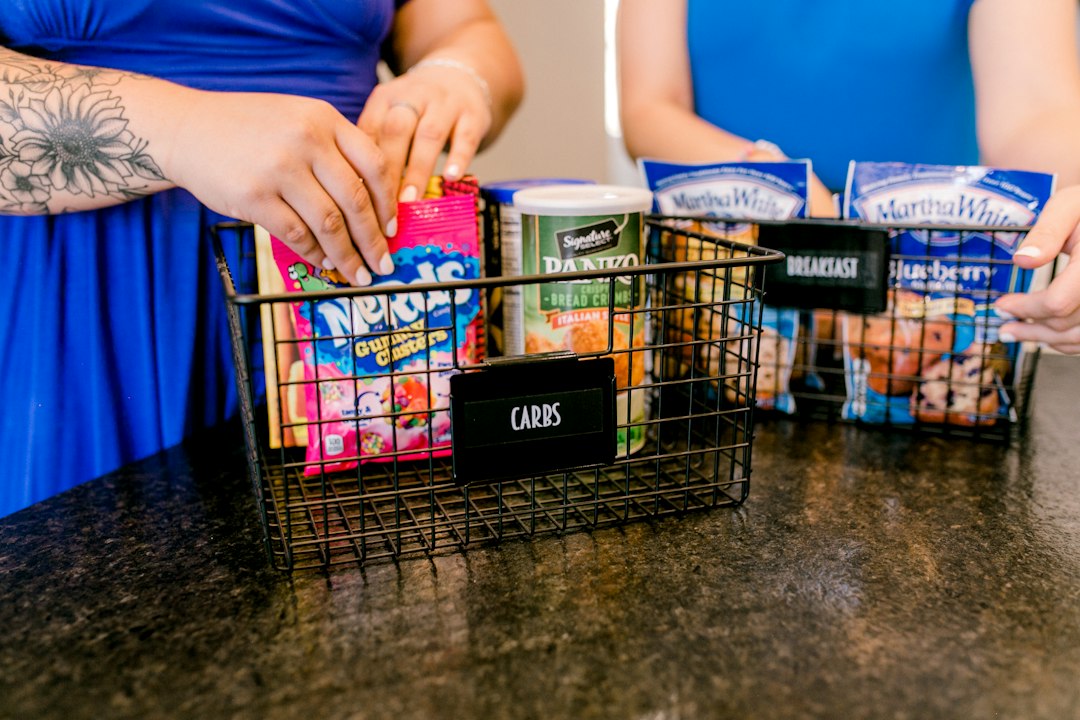
- One basket for breakfast items (oatmeal packets, pancake mix, syrup)
- One basket for "side dishes" (rice, pasta, instant potatoes)
- One basket for canned goods (beans, tomatoes, coconut milk)
Here's the thing: the baskets don't have to match perfectly. Mine are a mix of woven ones, plastic ones from the dollar store, and a few wire baskets I found at a garage sale. But because they're all roughly the same size and shape, they stack neatly. And because they're baskets, I can just toss things in without folding or arranging.
Real talk: Last month, I bought a bag of lentils that I never used because I forgot I had them. They sat in the back of the pantry for three weeks. With the basket system, I just toss them in the "grains and beans" basket. Even if I forget what I have, a quick glance at the basket reminds me. No more mysterious expired items.
Quick Win: Pick three categories that stress you out most (for me: baking, breakfast, snacks). Buy three baskets that fit your shelves. Put everything in those baskets. Breathe.
Hack #4: The "Front-Facing" Rule (And Why It's Worth the Effort)
What I wish I knew: Labels are great, but visibility is better.
I have a confession: I label everything. I have a label maker. I use it on my kids' water bottles, my office files, and yes, my pantry baskets. But I learned the hard way that labels don't matter if you can't see what's inside.
Here's the hack: everything goes label-out, front-facing. Cans face forward. Boxes face forward. Bags face forward. If you can't see the label, you won't use it. And if you won't use it, you'll buy duplicates. And if you buy duplicates, you'll end up with three jars of paprika and no cumin (true story).
A specific example: My baking basket used to be a disaster. I'd have five bags of flour (different types, different brands), three containers of sugar, and sprinkles from holidays past. I couldn't see what I had, so I'd buy more. The solution? I took everything out, faced each item label-forward, and put the oldest items in front.
Now, when I need all-purpose flour, I can see exactly how much I have. No more buying a new bag when I already have one. No more discovering a half-used bag of chocolate chips from last Christmas.
The child-proofing bonus: When everything is facing forward, it's easier to teach your kids what things look like. My daughter now knows where the crackers are (bottom shelf, front-facing) and where the cereal is (middle shelf, also front-facing). She can grab her own snack without asking me a million times. Win-win.
Hack #5: The "Emergency Shelf" (For When You're Running on Empty)
What I wish I knew: You need a shelf that's just for emergencies. And I don't mean fire emergencies—I mean "I haven't grocery shopped in 10 days and I'm ordering pizza again" emergencies.
I call this my "emergency shelf." It's the top shelf of my pantry (too high for kids to reach, naturally). On it, I keep:
- Two cans of soup (the good kind, not the watery kind)
- A jar of pasta sauce
- A box of pasta
- A can of beans
- A bag of frozen veggies (in the freezer, but it's part of the system)
- A box of mac and cheese (the kind that takes 10 minutes)
- A bag of tortilla chips and a jar of salsa
This shelf is sacred. I don't touch it for regular meals. I only use it when:
- I'm too tired to cook
- I forgot to defrost anything
- The kids are having a meltdown
- I'm having a meltdown
Real example: Two weeks ago, I had a day where everything went wrong. My daughter refused to eat dinner, I had a work deadline, and I realized I hadn't planned anything. I looked at my emergency shelf, grabbed the mac and cheese and the frozen peas, and had dinner on the table in 12 minutes. My daughter ate the peas (miraculously) and I ate the mac and cheese (not miraculously—I always eat the mac and cheese). No guilt, no shame.
Why this works: It takes the pressure off. You don't have to be a perfect meal planner. You don't have to have everything figured out. You just need a backup plan. And that backup plan lives on your emergency shelf.
FAQ: Pantry Organization for Working Moms
Q: How often should I actually clean out my pantry? A: Honestly? Once a season. I do it at the start of each season (spring, summer, fall, winter). Takes about 20 minutes. Toss expired stuff, wipe down shelves, reorganize. That's it. Don't overcomplicate it.
Q: What if I don't have a big pantry? A: Same rules apply, just smaller. Use baskets that fit your space. The "emergency shelf" can be a basket. The "kid height" zone can be a single shelf. Adjust, don't abandon.
Q: My kids are older (like 8+). Do these hacks still work? A: Yes, but with different goals. Older kids can help with the Post-It meal planning. They can also be responsible for their own snack zone. Give them ownership—they'll actually use it.
Q: I'm not a "basket person." What else can I use? A: Clear plastic bins work great. So do repurposed shoe boxes (cover them with contact paper for a polished look). Use what you have. The goal is function, not perfection.
Your Turn: 3 Things You Can Do Right Now
-
Set a 10-minute timer. Open your pantry. Remove everything that's expired. If you find something older than your youngest child, take a picture—you'll laugh later.
-
Create one "kid zone." Grab a basket, a bin, or even a shoebox. Fill it with 3-5 approved snacks. Put it on the lowest shelf. Tell your kids it's theirs. Watch them actually use it.
-
Write one Post-It meal plan. Pick three dinners for this week. Write them down. Stick it on your pantry door. That's it. You're already ahead of where you were.
And hey—if all else fails, remember: the perfect pantry doesn't exist. The functional pantry does. And you've got this.
Now go rescue that granola bar from 2023. You deserve better.
Tags
Related Articles
Pantry Organization Hacks for Busy Moms: 2026 Edition
Discover practical pantry organization hacks for busy moms. Save time, reduce stress, and keep your kitchen running smoothly with these simple tips.

Cozy Home Office Nook on a Budget: Working Mom's Guide
Create a cozy home office nook on a budget with these practical tips for working moms. Transform any small space into a functional, inviting workspace.
Quick Meal Prep for Busy Weeknights: 7 Real-Life Tips for Working Moms
Tired of the 6 p.m. scramble? These quick meal prep ideas for busy weeknights help working moms get dinner on the table without the stress.