Quick Weekend Home Reset Routine for Busy Working Moms
Quick Weekend Home Reset Routine for Busy Working Moms
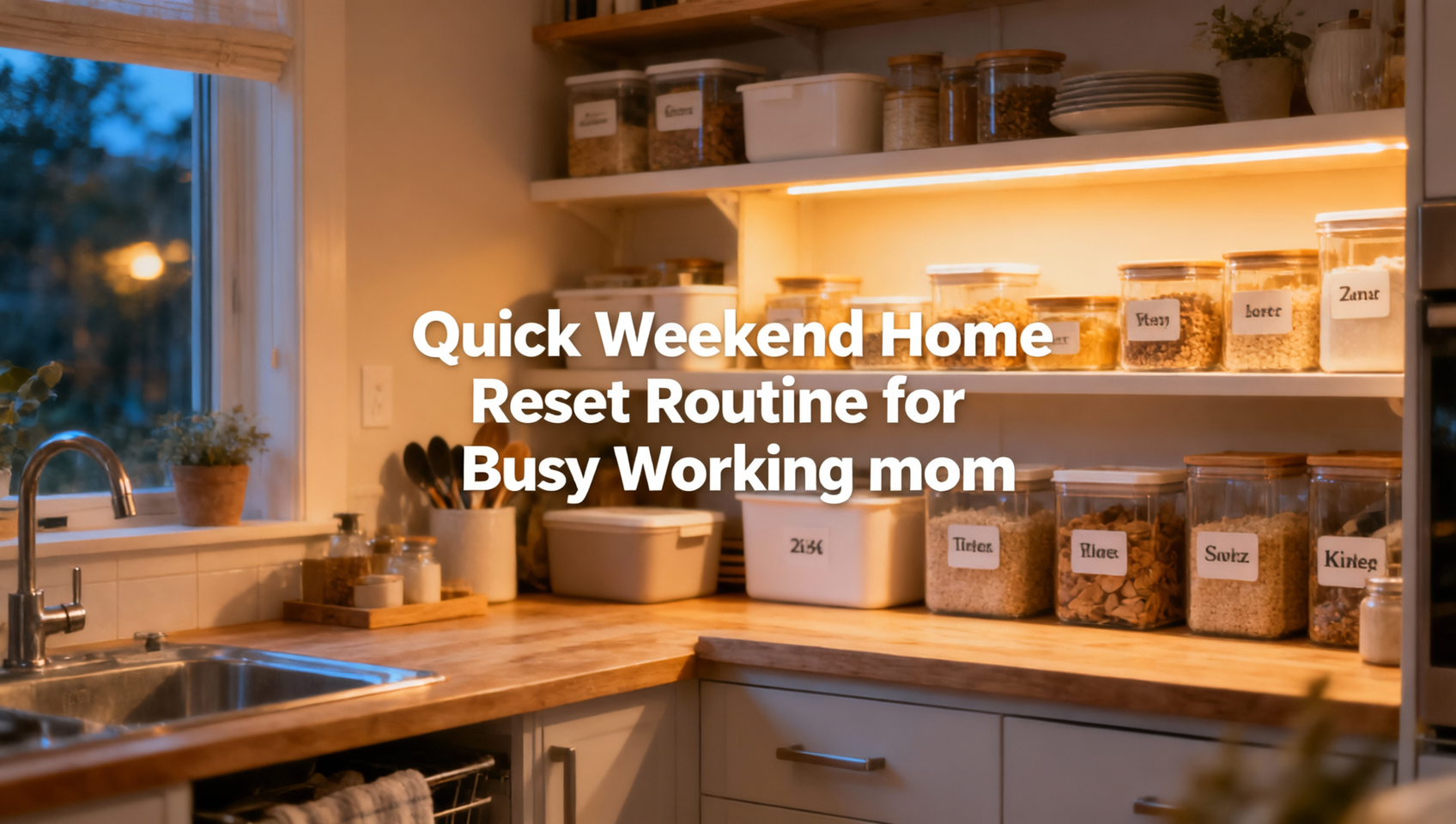
The Sunday Scaries Are Real. Let’s Fix That.
You know the feeling. It’s Sunday evening. The weekend, which somehow felt both endless and over in a blink, is closing. You’re staring down the barrel of another Monday, but instead of feeling prepped and powerful, you’re just…tired. The kitchen’s a mess, there’s a laundry mountain on the couch, and you have no idea what’s for lunch tomorrow. That low-grade anxiety humming in your chest? That’s the Sunday Scaries. And for working moms, they’re less of a scary movie and more of a weekly documentary.
But what if Sunday evening could feel different? Not like a frantic race against the clock, but like a gentle, intentional reset that sets you—and your whole family—up for a smoother week? It’s not about a six-hour deep clean. It’s about a strategic, 60-90 minute routine that pays off all week long. Let’s build yours.
H1: Your Quick Weekend Home Reset Routine for Busy Working Moms
This isn’t about adding more to your plate. It’s about a small investment of time that gives you back hours of peace during the chaos of the workweek. Think of it as putting your oxygen mask on first.
H2: The 4 PM Power Hour: Your Cleaning Routine, Simplified
Forget “cleaning the whole house.” That’s a recipe for burnout. Your cleaning routine for the reset is about impact, not perfection. Set a timer for 60 minutes and move through these zones:
- Kitchen Command (15 mins): This is non-negotiable. A clean kitchen on Sunday night makes Monday morning possible. Load/run the dishwasher, wipe counters and the stovetop, take out the trash. If your sink is empty and your counters are clear, you’ve won half the battle.
- Living Room Reset (10 mins): Grab a laundry basket. Walk through the main living areas and collect everything that’s out of place—toys, rogue socks, coffee mugs, paperwork. Don’t put things away now; just corral them into the basket. Then, fluff pillows, fold throws, and do a quick vacuum or sweep if the crumbs are winning.
- Bathroom Blitz (10 mins): Spray down showers, sinks, and toilets with cleaner and let it sit. Wipe mirrors, refill toilet paper, and hang fresh towels. Come back to scrub the sprayed areas at the end—the product does the work for you.
- Launchpad Load-Out (10 mins): This is your secret weapon. Stage everything by the door: backpacks, your work bag, library books, shoes, coats. Check that permission slips are signed and lunchboxes are on the counter.
- The Basket Triage (15 mins): Now, deal with that basket of clutter. Put things in their actual homes. This final step prevents the “clean but cluttered” look.
What I wish I knew: I used to think I had to clean everything before I could relax. Now I know that just cleaning the surfaces we touch and use the most—counters, floors, sinks—makes the whole house feel clean. The dust on the ceiling fan can wait.
H2: Taming the Chaos: Home Organization for the Time-Poor
Home organization isn’t about pretty bins (though they help). It’s about creating systems so things have a home, and you don’t waste mental energy finding them. Your reset is the time to maintain those systems.
- The 5-Minute Pantry Edit: While putting groceries away, pull out three expired items. Straighten shelves. This prevents the “I swear we had pasta!” panic on Wednesday.
- The Junk Drawer Jailbreak: Literally set a 5-minute timer. Dump it, trash the obvious garbage, and put back only what you’ve used in the last month. The rest goes in a “decide later” box (store it for a month, then donate/trash whatever you didn’t need).
- Closet Quick-Fix: Do not start a full KonMari session. Just do this: as you put away laundry, turn all your hangers backward. For the next month, as you wear and re-hang something, hang it the correct way. In a month, you’ll see what you actually wear.
My mom friend Sarah put it perfectly: “My goal isn’t a Pinterest house. It’s a house where we can find the tape when we need it, and I’m not tripping over shoes when I walk in the door. That’s the organization that actually matters to my sanity.”
H2: The Bedtime Routine Optimization That Actually Works (For You & Them)
Here’s the truth: if your night is chaotic, your morning will be hell. Bedtime routine optimization starts with you. Your kids’ routine is important, but yours is the anchor.
- The Common Mistake: We pour everything into getting the kids down and then collapse on the couch, scrolling until midnight, leaving zero time for ourselves. We wake up exhausted, already behind.
- The Fix: Claim 30-45 minutes after the kids are in bed but before you zone out. This is your Preparation Window. Use it for your reset tasks that make mornings easier: portion out tomorrow’s coffee, layout your clothes and the kids’ clothes, refill your water bottle.
Then, build your own 20-minute wind-down ritual. This isn’t optional self-care; it’s critical system maintenance. It could be: skincare, reading a few pages of a novel (not on a screen!), listening to a podcast, or just sitting in silence with tea. The goal is to signal to your brain that the workday—and the family workday—is over.
H2: Meal Planning for Busy Moms (The “No-Cook Sunday” Method)
Meal planning for busy moms has become this overwhelming thing. You’re supposed to have a color-coded spreadsheet and cook all Sunday. No. Let’s reframe it: it’s just deciding what to eat before you’re hungry and tired.
Try the “No-Cook Sunday” approach:
- Plan & Order (15 mins, Saturday): Scan your calendar. Which nights are late? Which are easy? Pick 2-3 simple recipes (think sheet pan, instant pot, leftovers-designed). Then, order your groceries for pickup. You don’t even have to go in the store.
- Prep, Don’t Cook (30 mins, Sunday): Wash and chop veggies for snacks and recipes. Cook a big batch of quinoa or rice. Hard-boil a half-dozen eggs. Portion out yogurt and berries for breakfasts. Cook a protein like shredded chicken or taco meat if you must, but keep it to one item.
- Assemble as You Go: Now, your weeknight “cooking” is just assembly. Tacos on Tuesday? The meat is cooked, you just heat it. Stir-fry on Thursday? The veggies are chopped.
This system acknowledges that Sunday is for resting, not becoming a short-order chef. You’re just setting future-you up for success.
Your Turn: Make This Work For You
This sunday reset routine is a template, not a commandment. The goal is a calmer week, not a perfect Sunday.
- Pick One Thing: This week, don’t try it all. Just pick one section—maybe the 4 PM Power Hour or your own bedtime optimization—and try it.
- Involve the Team: Your reset supports the whole house. Give kids the “basket corral” job. Have a partner tackle the kitchen or bedtime stories. Delegate one “reset task” to each family member.
- Celebrate the Win: At the end of your reset, take 60 seconds to walk through your main living area. Look at the clear counter, the staged launchpad, the prepped food. Acknowledge the effort. That feeling of readiness? That’s you winning.
Progress, not perfection. A reset that serves you, not one that exhausts you. You’ve got this.
FAQ
Q: What if my Sunday is already packed with sports/kids’ activities/obligations? A: Then it’s not your reset day! Pick another day that works. Maybe it’s a Friday night after the kids are in bed, or a Saturday morning before the fun begins. The day doesn’t matter; the habit does.
Q: I’m just too tired by Sunday evening. How do I find the motivation? A: Start tiny. Commit to just 10 minutes. Often, starting is the hardest part. Put on a great playlist or podcast, set your timer, and just begin with the kitchen command. You’ll usually find you have the energy to keep going once you start. If not, 10 minutes is still a win.
Q: How do I get my family on board without nagging? A: Frame it as a team effort for a better week for everyone. Use clear, specific asks: “Can you be in charge of getting all the shoes to the launchpad by 5 PM?” instead of “Help clean up.” Celebrate their contribution. When they see how much calmer mornings are, they’ll (slowly) buy in.
Q: This feels like a lot. Is it really worth it? A: Think of it this way: you’re trading 60-90 minutes of focused time for hours of saved time and reduced stress during the week. No more morning scavenger hunts, “what’s for dinner?” panic, or starting the day already frazzled. That trade-off is almost always worth it.
Tags
Related Articles

5-Minute Home Resets for Working Moms: Cozy & Clean
5-Minute Home Resets for Working Moms: Cozy & Clean
5-Minute Kitchen Reset for Working Moms: Keep It Clean Daily
5-Minute Kitchen Reset for Working Moms: Keep It Clean Daily

Create a Cozy Reading Nook: Budget-Friendly Home Decor
Create a Cozy Reading Nook: Budget-Friendly Home Decor